Custom rash guards last longest when you rinse them in cool fresh water right after every session, wash them cold on a gentle cycle without fabric softener, and dry them flat in the shade. Customized Rash Guards prints designs into the fabric itself, so good care protects the stretch and fit of the garment first, and the colors follow.
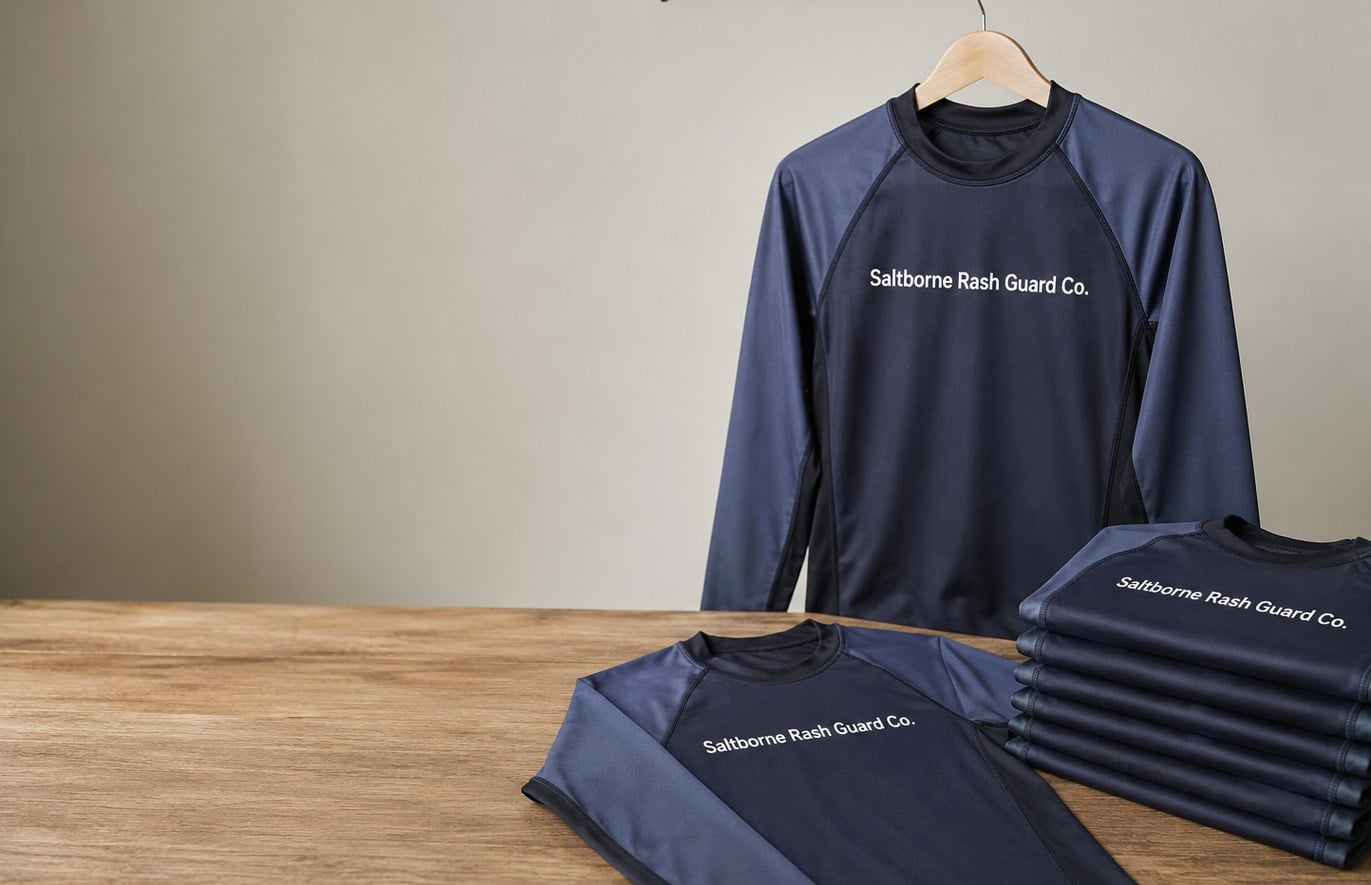
- Rinse in cool fresh water after every pool, ocean or mat session
- Wash cold on a gentle cycle, inside out, with no fabric softener or bleach
- Dry flat or on a line in the shade, never in a hot dryer
- Store fully dry, folded or rolled, away from direct sun
- Free mockup within 24 hours and about 2 weeks production when a set needs replacing
How should you wash a custom rash guard after the pool or the ocean?
Wash a custom rash guard in two steps: a quick rinse in cool fresh water as soon as you take it off, then a proper cold wash later. The rinse matters more than the wash. Chlorine, salt and sand keep working on the fibers while the rash guard sits damp in a bag, and a short rinse stops that before it starts.
For the machine wash, turn the rash guard inside out, use cold water and a gentle or delicates cycle, and add a small amount of mild detergent. Washing inside out reduces friction on the printed face and keeps zippers, hook-and-loop fasteners and rough fabrics from snagging the smooth surface. A mesh laundry bag adds another layer of protection when the load includes towels or board shorts.
- Rinse in cool fresh water as soon as possible after use.
- Gently squeeze out water; do not wring or twist.
- Turn inside out before the machine wash.
- Wash cold on a gentle cycle with mild detergent.
- Skip fabric softener, bleach and stain removers with solvents.
- Dry flat or on a line in the shade.
Hand washing in a basin of cool water works just as well for a single rash guard, and many swim coaches and surf instructors simply rinse in the shower after each session and machine wash once or twice a week.
What does chlorine, salt and sunscreen do to rash guard fabric?
Chlorine, salt and sunscreen each wear down a rash guard in a different way, which is why a rinse after every session is the single most useful habit. None of them ruins a rash guard in one day, but all three add up over a season when the garment is put away wet.
| Exposure | What happens | What to do |
|---|---|---|
| Pool chlorine | Weakens stretch fibers over time, so the rash guard loosens and loses its shape | Rinse right after the session; wash cold the same day if possible |
| Saltwater and sand | Salt dries into the fabric and sand abrades the surface and seams | Rinse thoroughly, shake out sand before washing |
| Sunscreen and oils | Can leave a film or yellowish marks, especially on light colors | Wash with mild detergent; pre-treat marks gently with dish soap |
| Mat sweat (BJJ, grappling) | Bacteria and odor build up if the rash guard stays damp | Wash after every training session, never re-wear unwashed |
| Strong sun while drying | Long direct exposure on a hot day stresses the fibers | Dry in the shade or indoors |
Sunscreen deserves extra attention on white, pale blue and yellow rash guards. If you can, apply sunscreen a little before putting the rash guard on so the lotion has time to absorb rather than transferring straight onto the fabric.
Can you put a custom rash guard in the dryer?
Avoid the dryer for custom rash guards. High heat is the fastest way to tire out the stretch fibers that give a rash guard its fitted feel, and a rash guard that has been tumble dried repeatedly tends to come out looser at the cuffs, hem and neck. Heat can also set sunscreen stains that would otherwise wash out.
Rash guard fabric dries quickly on its own. Lay it flat on a towel, or hang it over a line or a drying rack in the shade, and most rash guards are ready to wear again within a few hours. Avoid hanging a wet rash guard from a single clothes peg at the shoulder, since the weight of the water can stretch the neckline. Drape it over the line at the chest instead.
If a dryer is the only option, for example in a hotel on a group trip, use the lowest heat or air-only setting and take the rash guard out while it is still slightly damp. Never iron a rash guard, and never dry it on a radiator, heated rail or in a hot car.
How should a team, school or rental shop store custom rash guards?
Store custom rash guards only when they are completely dry, folded or rolled, in a cool place out of direct sunlight. Damp storage is the most common cause of odor and mildew spots, and those are much harder to remove than salt or chlorine.
Groups that share rash guards need a simple system. A swim school, surf camp or paddleboard rental shop often handles dozens of rash guards a day, and a few routines keep the whole set in service longer:
- Rinse station: a tub or hose of fresh water where every used rash guard is rinsed before it goes into the laundry bin.
- Drying rack in the shade: enough space that rash guards hang separately instead of in a damp pile.
- Bins by size: rash guards stored folded in labeled bins, so staff are not unfolding the whole stack to find a size.
- Rotation: issue the oldest clean rash guards first so wear spreads evenly across the set.
For an off-season, wash everything once more, dry it fully and store it in breathable bags or bins rather than sealed plastic, which can trap moisture. Keep the stock away from heaters, attics and sheds that get hot in summer.
Does washing affect the printed design on a custom rash guard?
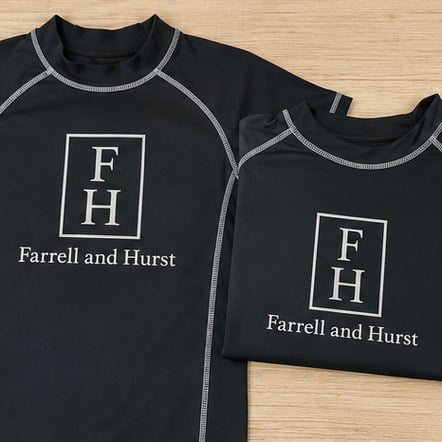
Washing has very little effect on the design of a sublimated custom rash guard, because sublimation dyes the fabric itself rather than placing a layer on top. There is no film to crack or peel, so the main care goal is protecting the fabric, and the design is protected along with it.
Colors can still dull slightly over many seasons of strong sun and chlorine, the same way any colored swimwear does. You can slow that down by rinsing promptly, washing cold, drying in the shade and keeping bleach and stain removers with harsh solvents away from the rash guard. Rough surfaces are the other risk: pool decks, surfboard wax, mat burns and hook-and-loop fasteners can abrade the face of the fabric, and the design shows that wear because it sits in the surface fibers.
When Customized Rash Guards prepares your mockup, you can ask about placement for heavy-contact uses. Grappling teams, for example, often keep small text away from the shoulders and elbows, where friction is highest.
How do you remove odor and stains from a rash guard?
Most rash guard odor comes from sweat and bacteria that stay in the fabric when the garment dries slowly or sits in a gym bag. The fix is usually a soak, not a stronger detergent.
- Odor: soak the rash guard in cool water with a splash of white vinegar for a while, then wash as normal. Sports detergents made for synthetic fabrics also help.
- Sunscreen marks: work a drop of mild dish soap into the mark with your fingers, leave it briefly, then rinse and wash cold.
- Sand and grit: shake the rash guard out and rinse it inside out before it goes in the machine.
- Mildew spots: wash promptly; spots that have set are often permanent, which is why drying fully before storage matters.
Avoid chlorine bleach on any rash guard, including white ones. Bleach weakens stretch fibers in the same way pool chlorine does, only faster.
When is it time to replace a set of custom rash guards?
Replace custom rash guards when they stop doing their job: the fit has loosened so the rash guard rides up or bunches, the fabric has thinned or pilled at the shoulders and underarms, the seams have started to open, or the colors no longer look right next to newer rash guards on the team. For staff uniforms, a mismatched set is often the trigger before the rash guards are actually worn out.
Keeping your approved design on file makes replacement simple. Customized Rash Guards can rerun an existing design, adjust names or sizes, and return a free mockup within 24 hours for any changes, with standard production of about 2 weeks and faster delivery available with express shipping. You pay nothing until you approve the design.
Many groups plan a top-up order before their busy season rather than waiting for rash guards to fail mid-summer. If you are reviewing quantities at the same time, the rash guard blog covers size runs and spares, and the quote form is the fastest way to start a reorder.
Frequently asked questions
Should a rash guard be rinsed even if it only got splashed?
A rash guard that only got splashed still benefits from a quick fresh-water rinse, because chlorine and salt work on the fabric even in small amounts once the garment dries. The rinse takes only moments under a shower or tap. Make it a habit after every wear and your custom rash guards from Customized Rash Guards keep their stretch and fit for many more sessions.
Can rash guards be washed with towels and regular laundry?
Rash guards can share a wash with other light items, but towels, jeans and anything with zippers or hook-and-loop fasteners are best kept out of the load. Towels shed lint onto smooth rash guard fabric, and rough items rub the printed surface. Washing rash guards inside out in a mesh laundry bag on a cold, gentle cycle is a simple way to mix loads safely.
What detergent is best for custom rash guards?
Custom rash guards do best with a small amount of mild liquid detergent, or a sports detergent made for synthetic fabrics. Powder detergents can leave residue in fitted stretch fabric, and too much of any detergent is harder to rinse out. Skip fabric softener entirely, because softener coats the fibers, traps odor and reduces the quick-drying feel that makes a rash guard comfortable.
How often should BJJ rash guards be washed?
BJJ and grappling rash guards should be washed after every training session, without exception. Mat sweat carries bacteria, and re-wearing an unwashed rash guard is a hygiene risk for you and your training partners. Wash cold, inside out, and dry in the shade so the rash guard is ready for the next class. Many academies order a second rash guard per member so one is always clean.
Why does my rash guard smell even after washing?
A rash guard that still smells after washing usually has bacteria trapped in the synthetic fibers, often from drying slowly or sitting damp in a bag. A soak in cool water with a little white vinegar before the next wash normally clears it. Avoid adding more detergent or softener, since buildup in the fabric holds odor rather than removing it.
Is it safe to leave a rash guard drying in the sun?
Rash guards dry quickly in the shade, so there is no need to leave them in strong direct sun. Long exposure on a hot day stresses the stretch fibers and can slowly dull colors over a season. Hang the rash guard over a line or lay it flat on a towel under cover. Customized Rash Guards recommends shade drying for every rash guard in a team or staff set.
Can a stretched-out rash guard be shrunk back to size?
A stretched-out rash guard generally cannot be shrunk back, because the looseness comes from tired stretch fibers rather than relaxed weave. Hot washes and dryers only weaken the fibers further. The better approach is prevention: rinse after use, wash cold and dry flat. Once a rash guard rides up or bunches during activity, replacing it with a correctly sized one is the practical fix.
How should rash guards be packed for a trip so they stay fresh?
Rash guards travel best rolled in a breathable mesh bag, kept separate from wet swimwear. After use on a trip, rinse each rash guard in the hotel shower, squeeze out the water gently and hang it over a chair or rail indoors. Never seal a damp rash guard in a plastic bag for the flight home, since mildew can set quickly.
Do white or light-colored rash guards need special care?
White and light-colored rash guards show sunscreen marks and dirt sooner than dark ones, so prompt washing matters more. Pre-treat sunscreen spots with a drop of mild dish soap and wash cold. Avoid chlorine bleach, which weakens the fabric. If your group wears a lot of sunscreen, Customized Rash Guards can suggest a mid-tone or patterned design that hides marks between washes.
Can a rental shop launder rash guards in a commercial washer?
A rental shop can wash rash guards in a commercial washer as long as it uses a cold, gentle setting and a mild detergent. Load rash guards in mesh bags so they do not tangle with towels or wetsuits, and skip the industrial dryer in favor of a shaded drying rack. Rinsing every rash guard as it comes back from a guest prevents chlorine and salt from building up.
How long should a well-cared-for custom rash guard last?
A custom rash guard that is rinsed after use, washed cold and dried in the shade lasts noticeably longer than one tumble dried or stored damp, though the exact life depends on how often it is worn and in what water. Daily lifeguard or rental use wears rash guards faster than weekend surfing. Watch for loosened fit, thinning fabric or open seams as the signal to reorder.
Get a free mockup for your rash guards
Send your logo or idea and the quantity you have in mind. Customized Rash Guards returns a free mockup within 24 hours, you approve the design before anything is produced, and standard turnaround is about two weeks with faster options available. Get a custom quote.